
 English
 Deutsch
 한국어
한국어 Русский
 Français
 日本語
日本語 لالعربية
 हिन्दी
 Español
 Português
 繁体中文
繁体中文 简体中文
简体中文















제품
Hazardous & Industrial
IP Communication
Gateways & Platforms
경험
리소스
리소스
Becke 커뮤니티에서 모범 사례를 발견하고, 혁신적인 솔루션을 탐색하고, 동료 파트너와 네트워크를 구축하십시오.
 지식
지식
2026-02-26 17:51:05
Remote Monitoring and Status Feedback of Mining Explosion-Proof Phones: Technical Analysis and Selection Guide
Remote monitoring and status feedback of mining explosion-proof phones are the core support for digital mine construction. This article details their technical principles, core functions, application scenarios, and selection points, adapting to the needs of B-end procurement and engineers, helping mines improve communication reliability, reduce operation and maintenance costs, and ensure underground operational safety.

Becke Telcom
The underground environment of mines is complex and harsh. Factors such as gas, coal dust, and humidity not only put strict requirements on the explosion-proof performance of communication equipment but also require real-time control and remote management of equipment operating status. As the core terminal for underground emergency communication and dispatch command, the remote monitoring and status feedback functions of mining explosion-proof phones are directly related to the stability of mine communication, operational safety, and management efficiency, and have become an indispensable part of digital mine construction.
Different from ordinary industrial communication equipment, mining explosion-proof phones need to accurately implement remote monitoring and status feedback on the basis of meeting national explosion-proof certification standards. They must not only adapt to the complex underground communication environment but also provide managers with clear and real-time equipment operating data to support equipment maintenance, fault diagnosis, and emergency response. This article comprehensively analyzes the remote monitoring and status feedback of mining explosion-proof phones from the aspects of technical principles, core functions, application scenarios, and selection points, providing practical references for mine enterprises in procurement, technical deployment, and daily operation and maintenance.
I. Core Significance of Remote Monitoring and Status Feedback for Mining Explosion-Proof Phones
The underground operation space of mines is closed and the environment is variable. Traditional mining explosion-proof phones can only realize basic voice call functions and cannot grasp the equipment operating status in real time. Once a fault occurs (such as line interruption, insufficient power, or signal abnormality), staff need to go down the well for inspection, which is not only time-consuming and labor-intensive but also may delay emergency communication due to the fault, leaving potential safety hazards.
The remote monitoring and status feedback function of mining explosion-proof phones essentially uses digital technology to transmit the operating data and working status of phone terminals to the ground monitoring center in real time, realizing "remote visualization, real-time controllability, and fault early warning". Its core significance is reflected in three aspects:
First, it improves communication reliability. By real-time monitoring core parameters such as signal strength, call quality, and power supply status of the phone, potential faults are detected in advance to achieve "early detection, early inspection, and early resolution", avoiding underground communication interruption caused by equipment faults and ensuring the smooth transmission of dispatch instructions and emergency information. Second, it reduces operation and maintenance costs. It reduces the frequency of manual underground inspections, accurately locates fault points through remote data feedback, shortens inspection time, and reduces the operational risks and labor costs of maintenance personnel. Third, it adapts to digital mine construction. It integrates the operating data of explosion-proof phones into the comprehensive mine monitoring system, realizing the collaborative linkage between communication equipment and personnel positioning, video monitoring, gas monitoring and other systems, and promoting the transformation of mine management towards intelligence and refinement.
For example, the explosion-proof video phone system put into use in the auxiliary shaft hoisting system of Yangcheng Coal Mine has realized real-time control of the phone status between the winch room and the upper and lower wellheads through remote monitoring functions. Combined with video feedback, it has upgraded traditional voice instructions to audio-visual interaction, which not only improves the accuracy of information transmission but also ensures the communication safety of the auxiliary shaft hoisting, the "vertical artery", becoming an important practical case of intelligent mine construction.
II. Technical Principles of Remote Monitoring and Status Feedback for Mining Explosion-Proof Phones
The remote monitoring and status feedback of mining explosion-proof phones are realized relying on a three-level architecture of "terminal collection - signal transmission - platform processing". The core technologies include three modules: explosion-proof adaptation, data collection, and wireless transmission, which take into account both explosion-proof safety and data transmission stability, adapting to the complex underground environment.
2.1 Core Technical Architecture
Terminal Collection Module: Integrated inside the mining explosion-proof phone, it adopts intrinsic safety design to avoid safety accidents caused by circuit sparks. At the same time, it is equipped with various sensors to collect the operating parameters of the phone in real time, including signal strength, call duration, power supply status (battery power, external power stability), line connection status, and explosion-proof shell sealing status, ensuring the accuracy and safety of data collection. This module must pass the national mine product safety certification. The shell is mostly made of high-strength alloy, and the internal circuit is intrinsically safe treated, which can effectively isolate the intrusion of flammable and explosive gases.
Signal Transmission Module: As the core of data transmission, it needs to adapt to the underground environment with no network, weak signal, and strong interference. The common transmission methods are divided into two categories: one is wired transmission, which relies on the existing industrial Ethernet and communication cables of the mine to achieve stable data transmission, suitable for fixed-installed explosion-proof phones; the other is wireless transmission, which uses 4G/5G, WiFi6, UWB and other technologies, combined with mine intrinsic safety wireless base stations, to achieve wireless data transmission, suitable for mobile and temporarily deployed explosion-proof phones, enabling zero-delay transmission of linkage between the ground and underground [5]. Some high-end equipment also supports Beidou positioning module, which can synchronously feed back the position information of the phone terminal, facilitating quick positioning of the equipment during emergency response.
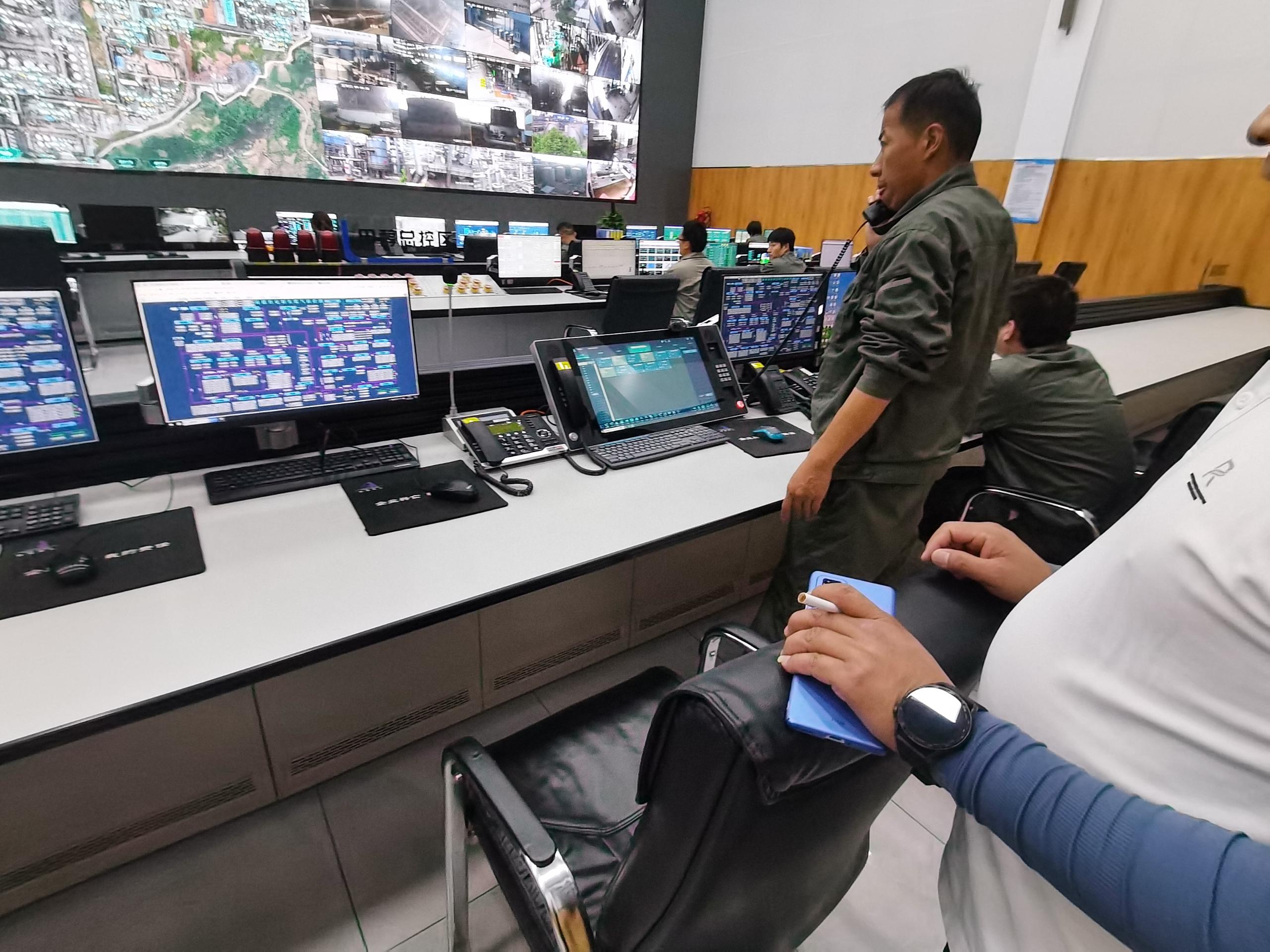
Platform Processing Module: That is, the ground remote monitoring platform, which can be integrated into the comprehensive mine dispatch system, receiving real-time data transmitted by underground explosion-proof phones for analysis, storage, display, and early warning. The platform has data visualization functions, which can intuitively present the operating status of each phone through charts, lists, etc.; at the same time, it supports fault early warning settings. When the equipment parameters exceed the normal range (such as too low signal strength, insufficient battery power), it automatically issues an acousto-optic alarm to remind managers to deal with it in time. Some platforms also support remote control functions, which can realize remote restart, parameter configuration and other operations of the phone, further improving operation and maintenance efficiency [5].
2.2 Collaborative Adaptation of Explosion-Proof and Monitoring
The remote monitoring and status feedback of mining explosion-proof phones must first meet the explosion-proof requirements, and the explosion-proof level cannot be reduced due to the addition of monitoring functions. The core adaptation points include: the integrated explosion-proof design of the monitoring module and the phone body to avoid external equipment damaging the explosion-proof structure; the use of low-power, intrinsic safety circuits in the process of data collection and transmission to prevent sparks caused by circuit overload and short circuit; the selection of mine intrinsic safety products for monitoring sensors, with a protection level of not less than IP65, which can adapt to the underground humid, dusty, high and low temperature environment and ensure long-term stable operation [4].
For example, the Topeng N56Ex public network explosion-proof walkie-talkie (which can be adapted to the explosion-proof phone monitoring function) adopts a fully sealed explosion-proof shell and anti-static design to eliminate sparks. At the same time, it is equipped with intelligent sensors that can feedback the equipment operating status in real time. Its waterproof, dustproof and shockproof design can still stably transmit monitoring data even in scenarios where the equipment falls or coal dust accumulates, fully reflecting the collaborative adaptation concept of explosion-proof and monitoring [4].
III. Core Functions of Remote Monitoring and Status Feedback for Mining Explosion-Proof Phones
Combined with the actual application needs of mines, the remote monitoring and status feedback functions of mining explosion-proof phones need to take into account practicality, pertinence, and convenience. The core functions can be divided into four categories: real-time monitoring, fault feedback, data management, and emergency linkage, covering the whole scenarios of equipment operation and maintenance, emergency response, and daily management.
3.1 Real-Time Status Monitoring Function
This is the core basic function. The ground monitoring platform can real-time view the operating status of each underground explosion-proof phone, including: communication status (whether online, signal strength, call quality), power supply status (battery power, whether the external power supply is normal; if powered by battery, it can feedback the remaining power and battery life), equipment status (whether the shell seal is intact, whether the buttons are normal, the working status of the speaker/microphone), and environment adaptation status (whether it is in a high temperature, high humidity, high gas environment, and whether the equipment operating parameters are adapted to the current environment).
For video explosion-proof phones, video image feedback can also be realized through remote monitoring. For example, in the explosion-proof video phone system of Yangcheng Coal Mine, the ground dispatch center can view the real-time video of the underground phone terminal through the monitoring platform, clearly observe the cage parking position, shaking table status, and personnel getting on and off dynamics, realizing "visual precise control" and further expanding the application scenarios of remote monitoring [1].
3.2 Accurate Fault Feedback Function
When a fault occurs in the explosion-proof phone, the remote monitoring system can quickly capture the fault signal, realizing "fault positioning, accurate feedback, and hierarchical early warning". Specifically, fault feedback is divided into three levels: first, fault type feedback, clearly marking the fault cause, such as line interruption, signal loss, battery damage, explosion-proof seal failure, etc.; second, fault location feedback, combining with the positioning module to accurately mark the underground location of the faulty phone (such as a certain mining area, a certain roadway number), avoiding blind manual inspection; third, hierarchical early warning, issuing different levels of alarm signals according to the severity of the fault (general fault, emergency fault). Emergency faults (such as communication interruption, explosion-proof failure) can be directly pushed to the manager's mobile phone to ensure rapid response.
For example, when the underground explosion-proof phone is interrupted due to line damage, the monitoring platform will immediately issue an alarm, and at the same time mark the fault location and fault type. Maintenance personnel can directly carry maintenance tools to the fault point according to the feedback information, greatly shortening the inspection and maintenance time and reducing the impact of communication interruption.
3.3 Data Statistics and Management Function
The remote monitoring platform can automatically store the operating data, fault records, call records and other information of the explosion-proof phone, forming a complete database that supports data statistics, query and analysis. Managers can query the operation history, fault frequency, and maintenance records of a single device through the platform, and also count the overall operating status of multiple devices, analyze the law of equipment faults, and provide data support for equipment procurement and operation and maintenance plan formulation.
In addition, some platforms also support data export function, which can export statistical data into tables, facilitating docking with other mine management systems to achieve data sharing. This function is highly consistent with the equipment management needs of mine enterprises such as Jingmei Group, and can help enterprises realize the full life cycle management of communication equipment such as explosion-proof phones [2].
3.4 Emergency Linkage Function
In the event of sudden mine accidents (such as gas explosion, water inrush, collapse), the remote monitoring and status feedback functions of mining explosion-proof phones can play an important role in realizing emergency linkage. On the one hand, the monitoring platform can quickly check the status of explosion-proof phones in the accident area, screen out usable terminals, and provide communication support for emergency dispatch and personnel evacuation; on the other hand, underground personnel can send distress signals to the ground monitoring center through the emergency call function of the explosion-proof phone. The monitoring platform can receive distress information in real time and quickly lock the position of the distressed personnel combined with phone positioning, striving for time for rescue work [5].
In the mining communication solution launched by Huawei Qingyun, its mining communication mobile phone (which can be adapted to explosion-proof phone functions) can realize one-key SOS distress through emergency linkage design, and synchronously upload key information such as personnel position and equipment status to provide data support for rescue decisions. This design concept is also applicable to the remote monitoring and emergency linkage scenarios of mining explosion-proof phones [3].
IV. Practical Application Scenarios of Remote Monitoring and Status Feedback for Mining Explosion-Proof Phones
The remote monitoring and status feedback functions of mining explosion-proof phones have been widely used in various types of mines such as coal mines, metal mines, and non-metal mines, covering key areas such as underground mining areas, excavation working faces, winch rooms, power substations, and refuge chambers, and achieving precise adaptation according to the needs of different scenarios.
4.1 Daily Operation and Maintenance Scenario of Underground Mining Areas
The underground mining area has a complex environment, and explosion-proof phones are scattered, making manual operation and maintenance difficult. Through the remote monitoring and status feedback functions, managers can real-time grasp the operating status of all explosion-proof phones in the mining area on the ground without frequent underground inspections. When a phone has problems such as weakened signal or insufficient power, maintenance personnel can be arranged in advance to deal with it, avoiding communication interruption between the mining area and the ground and ensuring the daily communication of underground operators and the transmission of dispatch instructions.
For example, in the fully mechanized mining face of a coal mine, the explosion-proof phone needs to be in a high-vibration and high-dust environment for a long time. Through remote monitoring, the vibration amplitude and dust adhesion of the equipment can be fed back in real time, reminding maintenance personnel to clean and maintain it in time to ensure long-term stable operation of the equipment.
4.2 Emergency Response Scenario
When a sudden mine accident occurs, unobstructed communication is the key to emergency response. The remote monitoring and status feedback functions of mining explosion-proof phones can quickly check the status of communication equipment in the accident area, help managers judge which terminals are usable, and thus quickly build an emergency communication link. At the same time, through the fault feedback function, the damaged phone can be quickly repaired and communication can be restored, providing guarantee for personnel evacuation and rescue command.
For example, when an abnormality occurs in the auxiliary shaft hoisting system of Yangcheng Coal Mine, managers can view the status of the explosion-proof video phones in the winch room and the upper and lower wellheads through the remote monitoring platform, grasp the on-site situation through video feedback, and transmit emergency dispatch instructions through the phone terminal to quickly handle the abnormality and avoid the expansion of the accident [1].
4.3 Equipment Batch Management Scenario
For large-scale mine enterprises, there are a large number of underground explosion-proof phones distributed in different areas, making batch management difficult. Through the remote monitoring platform, centralized management of all explosion-proof phones can be realized, the operating status of all equipment can be viewed in real time, the fault situation and maintenance records can be counted in batches, and the operation and maintenance plan can be optimized. At the same time, equipment parameters can be remotely configured through the platform, such as adjusting call volume and setting speed dial keys, to improve the convenience of equipment use [1].
In the mine construction of Jingmei Group Jingtai Coal Industry, a large number of explosion-proof phones and supporting communication equipment were purchased. Through centralized remote monitoring, batch management of explosion-proof phones in the whole mine was realized, which greatly improved the equipment operation and maintenance efficiency and reduced the management cost [2].
4.4 Compliance Control Scenario
According to the requirements of the "Coal Mine Safety Regulations", mines must be equipped with complete communication equipment, and the equipment must be regularly inspected and maintained to ensure compliance with explosion-proof standards. The remote monitoring and status feedback functions of mining explosion-proof phones can automatically record the operating data and maintenance records of the equipment, form a compliance control file, facilitate the inspection of regulatory authorities, and also help mine enterprises implement the main responsibility of production safety, avoiding potential safety hazards caused by non-compliant equipment [5].
V. Selection Points for Remote Monitoring and Status Feedback of Mining Explosion-Proof Phones
For mine enterprises, selecting mining explosion-proof phones with high-quality remote monitoring and status feedback functions needs to take into account core factors such as explosion-proof performance, monitoring accuracy, transmission stability, and adaptability. Combined with their own mine type, underground environment, and management needs, the following points should be comprehensively considered to avoid blind procurement.
5.1 Prioritize Confirming Explosion-Proof Level and Safety Certification
The core premise of mining explosion-proof phones is explosion-proof safety, and the remote monitoring function cannot override the explosion-proof performance. When selecting, it is necessary to confirm the explosion-proof level of the equipment. For underground coal mines, intrinsically safe equipment of Ex ia IIC T6 level is preferred. For metal mines and non-metal mines, the corresponding explosion-proof level can be selected according to the environmental hazard level; at the same time, it is necessary to confirm that the equipment has passed the national mine product safety certification (MA certification) and explosion-proof certification to ensure compliance with the safety production requirements of mines [1][4]. In addition, the shell material and sealing performance of the equipment also need to be focused on. Products with high-strength alloy shell and fully sealed design are preferred, which can effectively isolate flammable and explosive gases and coal dust [1].
5.2 Pay Attention to Monitoring Accuracy and Data Integrity
The core of remote monitoring and status feedback is data accuracy. When selecting, it is necessary to pay attention to the data collection accuracy of the equipment to ensure that the feedback of parameters such as signal strength, power, and fault type is accurate; at the same time, it is necessary to confirm whether the parameters covered by the monitoring function are comprehensive and whether they can meet their own operation and maintenance needs, such as whether it supports the monitoring of the explosion-proof shell sealing status and environmental parameter adaptation. For video explosion-proof phones, it is also necessary to pay attention to the clarity of video feedback and whether it supports anti-glare and intelligent noise reduction functions to ensure clear audio-visual interaction in the complex underground lighting and noisy environment [1].
5.3 Adapt to Underground Transmission Environment
The underground environment has weak signals and strong interference. When selecting, it is necessary to choose the appropriate transmission method according to the communication architecture of the mine. If the mine has deployed industrial Ethernet, wired transmission type explosion-proof phones can be selected to ensure stable data transmission; if there is no fixed communication line underground or mobile deployment is required, wireless transmission type equipment can be selected. Products supporting 4G/5G and WiFi6 are preferred to ensure zero-delay linkage between the ground and underground. At the same time, it is necessary to confirm the protection level of the transmission module to adapt to the underground humid and dusty environment [2][4]. In addition, the signal coverage capability of the equipment also needs to be focused on. Products with a large unobstructed coverage radius are preferred to reduce the number of base stations deployed [5].
5.4 Consider Platform Compatibility and Usability
The compatibility and usability of the remote monitoring platform directly affect the management efficiency. When selecting, it is necessary to confirm whether the monitoring platform can dock with the existing comprehensive dispatch system, personnel positioning system, video monitoring system of the mine to achieve data sharing; at the same time, the platform operation should be simple and easy to understand, supporting data visualization, fault early warning, data export and other functions to facilitate managers to get started quickly. For large-scale mines, it is also necessary to confirm whether the platform supports multi-terminal login to facilitate the collaborative management of managers from different departments [5].
5.5 Consider Operation and Maintenance Costs and After-Sales Support
Mine equipment is difficult to operate and maintain. When selecting, it is necessary to pay attention to the stability and maintainability of the equipment. Products with low failure rate, simple structure, and convenient maintenance are preferred to reduce the later operation and maintenance costs; at the same time, it is necessary to confirm the after-sales support services provided by the manufacturer, such as whether to provide on-site maintenance, technical support, spare parts supply, etc., to ensure that the equipment can be handled in time when a fault occurs, avoiding affecting underground communication [2]. In addition, the battery life of the equipment also needs to be considered. For battery-powered equipment, products with long battery life and fast charging support are preferred to meet the needs of multi-shift operations underground [4].
VI. Industry Development Trends and Summary
With the continuous advancement of digital mine construction, the remote monitoring and status feedback functions of mining explosion-proof phones are developing towards "intelligence, integration, and collaboration". In the future, the equipment will further integrate AI intelligent analysis functions, which can predict equipment faults through historical operating data to achieve "proactive operation and maintenance"; at the same time, it will be deeply integrated with mine personnel positioning, gas monitoring, emergency rescue and other systems to achieve data collaboration and linkage disposal, further improving the level of mine safety production management [3][5].
In summary, the remote monitoring and status feedback of mining explosion-proof phones are not only important means to improve the reliability of mine communication and reduce operation and maintenance costs but also the core support for digital mine construction. In the process of selection and deployment, mine enterprises must first ensure explosion-proof safety, select appropriate equipment and transmission methods according to their own needs, give full play to the functional value of remote monitoring and status feedback, and provide strong guarantee for the safe and efficient development of underground operations.
For B-end procurement, it is necessary to focus on the explosion-proof certification, compatibility, and after-sales support of the equipment; for engineers, it is necessary to pay attention to the technical parameters, transmission stability, and platform adaptability of the equipment; for technical novices, they can quickly understand the core functions and application value through the analysis of this article, providing reference for daily management and operation and maintenance.
레이블:
관련 뉴스
클린룸 전화기란 무엇인가? 통제 구역을 위한 SIP 통신
2026-09-29
통합 디스패치 시스템은 여러 통신 네트워크를 어떻게 통합합니까?
2026-09-22
2026-08-31
2026-08-24
철도 자동 호출 시스템 솔루션: 자동 호출, 확인 피드백 및 배차 연동
2026-08-17


이메일 주소:
핫라인: