
 English
 Deutsch
 한국어
한국어 Русский
 Français
 日本語
日本語 لالعربية
 हिन्दी
 Español
 Português
 繁体中文
繁体中文 简体中文
简体中文

















제품
Hazardous & Industrial
IP Communication
Gateways & Platforms
경험
리소스
리소스
Becke 커뮤니티에서 모범 사례를 발견하고, 혁신적인 솔루션을 탐색하고, 동료 파트너와 네트워크를 구축하십시오.
 지식
지식
2026-03-13 15:30:39
Application Practice of Explosion-proof Amplification System in Oil Storage Tank Area
The detailed explanation of the explosion-proof public address station in the oil storage tank area is the core equipment selection, system networking, on-site deployment, operation and maintenance specifications, and emergency application practice for on-site communication, emergency dispatching, and safety warning. It is in line with the safety standards of the petrochemical industry and aims to solve the pain points of voice communication in high-risk environments.

Becke Telcom
Pain Points in Oil Tank Farm Communication and the Necessity of Applying Explosion-Proof Amplified Telephones
Oil tank farms are core storage and transfer links in the petrochemical industry chain, centrally storing flammable and explosive hazardous chemicals such as crude oil, refined oil, liquefied hydrocarbons, and aromatics. Flammable volatile oil vapors are continuously present in the area, classifying it as a typical explosive gas atmosphere. According to national standards, it is designated as Zone 1 and Zone 2 hazardous areas, imposing extremely stringent requirements on the explosion-proof performance, safety reliability, and environmental adaptability of electrical equipment. Simultaneously, tank farms generally cover large areas with densely arranged tanks, accompanied by strong noise interference from pump operation, oil loading/unloading, wind, and rain. Traditional ordinary communication equipment and non-explosion-proof public address systems cannot meet the core needs of on-site operations, inspection scheduling, and emergency response. They are prone to issues like communication blind spots, voice distortion, and potential equipment safety hazards, directly threatening on-site operational safety and emergency response efficiency.
Core Communication Pain Points in Oil Tank Farms
Equipment Safety Risks in Flammable and Explosive Environments
Ordinary electrical equipment can easily generate electrical sparks or high surface temperatures during operation. Contact with flammable oil vapor mixtures can readily trigger major accidents like combustion or explosion, failing to meet petrochemical industry explosion-proof safety regulations and strictly prohibiting their use in hazardous areas of tank farms. Furthermore, tank farms suffer year-round from harsh conditions like salt spray, oil vapor corrosion, rain erosion, and dust accumulation. Ordinary equipment is prone to rust, short circuits, component aging, leading to persistently high failure rates and significantly increased maintenance costs.
Communication Difficulties in Large Areas with High Noise Levels
Individual tank volumes in large-scale oil tank farms can reach 100,000 cubic meters or more, covering extensive areas with dispersed inspection and operation personnel. Ordinary two-way radios suffer from limited communication range, signal obstruction, and poor anti-interference capabilities, making clear transmission impossible for long-distance and multi-party dispatching. On-site background noise typically exceeds 85dB, surpassing 100dB in some pump-dense areas. Ordinary amplification equipment lacks sufficient volume and speech clarity, making it difficult to accurately convey critical instructions and warnings, easily leading to operational errors.
Shortcomings in Rapid Emergency Response
In case of sudden incidents like leaks, fires, or explosions in oil tank farms, immediate issuance of evacuation instructions, dispatching emergency personnel, and communicating response plans are crucial. However, traditional communication methods suffer from delayed response, incomplete coverage, and inability to achieve multi-party coordination, easily missing the optimal emergency response window and escalating accident losses. Simultaneously, routine production scheduling, equipment inspection, loading/unloading operations, and maintenance supervision also require a stable, reliable, and delay-free voice communication system to ensure smooth operational workflows and effective safety control.
Core Application Value of Explosion-Proof Amplified Telephones
Explosion-proof amplified telephones are integrated voice communication devices specifically designed for explosive hazardous environments. They integrate functions such as explosion-proof intercom, zoned broadcasting, all-call broadcasting, emergency alarm, and multi-party conversation. Strictly designed according to national and international explosion-proof standards, they are suitable for Zone 1 and Zone 2 explosive gas environments in oil tank farms, fundamentally eliminating the risk of safety incidents caused by the equipment itself. Compared to ordinary communication devices, explosion-proof amplified telephones offer advantages such as high explosion-proof grade, high ingress protection grade, noise resistance, corrosion resistance, and long-distance transmission. They achieve seamless voice coverage across the entire tank farm, serving both daily production scheduling and emergency command needs. They are indispensable core equipment in the safety communication system of oil tank farms and essential facilities for meeting petrochemical industry safety production standards and passing safety acceptance inspections.
Core Technical Requirements and Selection Criteria for Explosion-Proof Amplified Telephones in Oil Tank Farms
The specific working conditions in oil tank farms dictate that explosion-proof amplified telephones cannot be generic industrial models. Selection must be based on the site environment, hazard level, communication needs, and compliance requirements, focusing on four key dimensions: explosion-proof performance, environmental adaptability, functional suitability, and system compatibility. This ensures the equipment is compliant, user-friendly, durable, and suitable for long-term stable operation in tank farms.
Core Explosion-Proof Standards and Grade Requirements
Explosion-proof performance is the core indicator for explosion-proof amplified telephones. They must comply with mandatory national standards and common international standards. Using equipment without proper explosion-proof certification, with expired certification, or with insufficient certification levels is strictly prohibited to avoid potential safety hazards.
Domestic Explosion-Proof Standards and Grades
To suit the explosive gas atmosphere in oil tank farms, compliance with standards such as GB 3836.1-2010 (Explosive atmospheres – Part 1: Equipment – General requirements), GB 3836.2-2010 (Explosive atmospheres – Part 2: Equipment protection by flameproof enclosures "d"), and GB 3836.4-2010 (Explosive atmospheres – Part 4: Equipment protection by intrinsic safety "i") is required. The preferred explosion-proof grade is Ex d IIC T6 Gb (Flameproof type, suitable for IIC class explosive gases, temperature class T6, maximum surface temperature ≤ 85°C). This covers the vast majority of flammable and explosive media in the petrochemical industry, such as hydrogen, ethylene, and oil vapor, making it suitable for Zone 1 and Zone 2 hazardous areas in tank farms.
International Explosion-Proof Certification Suitability
For international petrochemical projects or export tank farm projects, additional IECEx (International) and ATEX (EU) explosion-proof certifications are required to ensure the equipment meets global safety standards and fulfills cross-border project acceptance and maintenance requirements. Furthermore, equipment must clearly display the explosion-proof mark, certification number, and applicable hazardous area to facilitate on-site acceptance and routine verification.
Core Environmental Adaptability Parameters
Given the harsh outdoor environment of oil tank farms, equipment must possess exceptional weather resistance, corrosion resistance, and dust/water ingress protection to ensure long-term stable outdoor operation and minimize maintenance frequency.
- Ingress Protection (IP) Rating: For outdoor installed units, the protection rating must not be lower than IP66. For indoor control room or pump house models, IP65 is acceptable. This ensures complete protection against dust ingress and withstands heavy rain or high-pressure water jets, adapting to outdoor rain and sandstorms.
- Corrosion Protection Level: Constructed using cast aluminum alloy or 304 stainless steel housings with surface treatments like spraying and passivation. The corrosion protection level should reach WF2, enabling resistance to corrosion from oil vapor, salt spray, and acidic gases, preventing housing rust and seal failure during long-term use.
- Operating Temperature: A wide operating temperature range, suitable for -40°C to +70°C extreme environments, meeting the year-round operational needs of tank farms in severely cold northern regions and hot southern regions. No additional insulation is needed for low temperatures, and no component overheating failures should occur at high temperatures.
- Noise Resistance Performance: Equipped with high-noise rejection microphones and high-power amplification units. Noise rejection capability should be ≥ 110dB, enabling clear intercom and broadcasting in high-noise environments with voice distortion rates below 5%, ensuring error-free instruction transmission.
Functional Suitability and System Selection Principles
Based on the operational modes of oil tank farms, explosion-proof amplified telephones are mainly categorized into Hostless Type, IP Network Type, and Bus Type. Selection can be based on farm size, communication needs, and intelligence level, balancing practicality and cost-effectiveness.
Hostless Explosion-Proof Amplified Telephones
Suitable for small to medium-sized tank farms or scenarios with simple communication needs. No independent host is required. Multiple telephones are connected in a daisy chain via two-core bus, supporting up to 30 telephones online simultaneously. They support one-key all-call without dialing, two-way intercom, and multi-party conversation. Failure of a single unit does not affect the overall system operation. Simple installation, low cost, and easy maintenance make them ideal for traditional tank farms with limited budgets and no need for intelligent control.
IP Network Type Explosion-Proof Amplified Telephones
Suitable for large-scale petrochemical parks and intelligent tank farms. Based on Ethernet transmission supporting TCP/IP and SIP protocols, they can integrate with on-site DCS, SCADA, fire alarm systems, and video surveillance systems. Functions include zoned broadcasting, timed broadcasting, emergency alarm broadcasting, remote control, and status monitoring. They support cross-regional networking and multi-level dispatching, adapting to the needs of smart petrochemical construction. This is currently the mainstream choice for large tank farms.
Bus Type Explosion-Proof Amplified Telephones
Suitable for medium-sized tank farms or scenarios requiring comprehensive wired communication coverage. Signals are transmitted via dedicated buses with transmission distances up to 5 kilometers or more, ensuring signal stability and strong anti-interference capability network fluctuations. They support zoned intercom, all-call broadcasting, and emergency call functions, making them suitable for tank farms with high requirements for communication stability and areas without network coverage.
System Networking and Deployment Plan for Explosion-Proof Amplified Telephones in Oil Tank Farms
The application effectiveness of explosion-proof amplified telephones depends critically on the system network design and on-site installation specifications. It is necessary to develop a targeted networking plan based on the tank farm layout, hazardous area classification, operation point distribution, and communication coverage requirements, strictly adhering to petrochemical industry electrical installation codes to ensure seamless coverage, stable operation, safety, and compliance.
Overall System Architecture Design
The explosion-proof amplified telephone system for oil tank farms adopts a layered architecture of "Control Center + Field Telephones + Transmission Lines + Auxiliary Equipment", catering to both routine control and emergency. The overall architecture consists of three layers:
Central Control Layer
Located in the central control room, equipped with the system host, broadcast console, emergency dispatch terminal, and recording equipment. This layer enables centralized control, issuance, status monitoring, and recording archiving for all explosion-proof amplified telephones across the farm. In emergencies, it can initiate a one-key full-area emergency broadcast and simultaneously fire and security systems.
Transmission Network Layer
Based on the selected system type, transmission methods include dedicated bus, Ethernet, or fiber optics. Outdoor lines must be laid in explosion-proof galvanized steel conduits, high-temperature pipelines and flammable medium pipes. Line connections must use explosion-proof sealing fittings to prevent safety hazards caused by line damage or leakage, ensuring stable and interference-free signal transmission.
Field Device Layer
Deploys front-end devices such as explosion-proof amplified telephones, explosion-proof speakers, and emergency call buttons at key locations in the tank farm. Coverage includes tank tops, tank farm inspection walkways, loading/unloading platforms, pump houses, valve areas, and boundary evacuation routes, achieving comprehensive voice signal coverage across the entire area.
Field Point Deployment Specifications
Point deployment follows the principle of "no communication, aligning with operational needs, emergency priority." Based on the tank farm layout, precise planning ensures every operational area, inspection route, and evacuation passage can clearly receive voice signals, while avoiding equipment installation interfering with normal tank operations and inspection activities.
- Tank Area: Deploy one wall-mounted explosion-proof amplified telephone per 2-3 tank groups. Install at a height of 1.2-1.5 meters, away from tank wall inlets and drains, ensuring coverage of and maintenance areas around the tanks. Additional explosion-proof speakers can be installed on large tank top inspection walkways to enhance signal coverage.
- Loading/Unloading Platform Area: Deploy noise-resistant explosion-proof amplified telephones near loading arms and points. Adapt to the high-noise environment, facilitating real-time intercom between operators and the control room for issuing loading instructions and warning of leak risks.
- Pump Houses and Valve Areas: Deploy one explosion-proof amplified telephone per pump house or valve room. Install near operator stations for easy of dispatch instructions and one-key calling to the control room in emergencies.
- Inspection Walkways and Evacuation Routes: Deploy explosion-proof speakers every 50-80 meters along the tank farm inspection paths and emergency evacuation routes. Link these with main telephones to ensure personnel can receive signals throughout their route and evacuation instructions are clearly conveyed during emergencies.
- Boundaries and Controlled Areas: Deploy explosion-proof amplified telephones at tank farm boundaries and access points to serve external personnel control and boundary communication needs.
Installation and Wiring Safety Specifications
Installation of explosion-proof amplified telephones must be carried out by professionals with petrochemical electrical installation qualifications, strictly following GB 50058 (Code for design of electrical installations in explosive atmospheres) and GB 50257 (Code for construction and acceptance of electrical equipment installation in explosion and fire hazardous environments) to prevent safety hazards from improper installation.
Before installation, check the explosion-proof certification, product certificate, and integrity, ensuring no damage and intact seals. Use explosion-proof brackets for fixing, and ensure the housing is reliably grounded with ground resistance ≤ 4Ω. Use explosion-proof cable glands for wiring, and ensure conduits are tightly sealed. No exposed wires or connections are allowed. After wiring, conduct explosion-proof seal testing to ensure the flameproof enclosure meets sealing performance requirements, preventing oil vapor from internal circuits. For outdoor installations, add rain/sun shields to further enhance weather resistance.
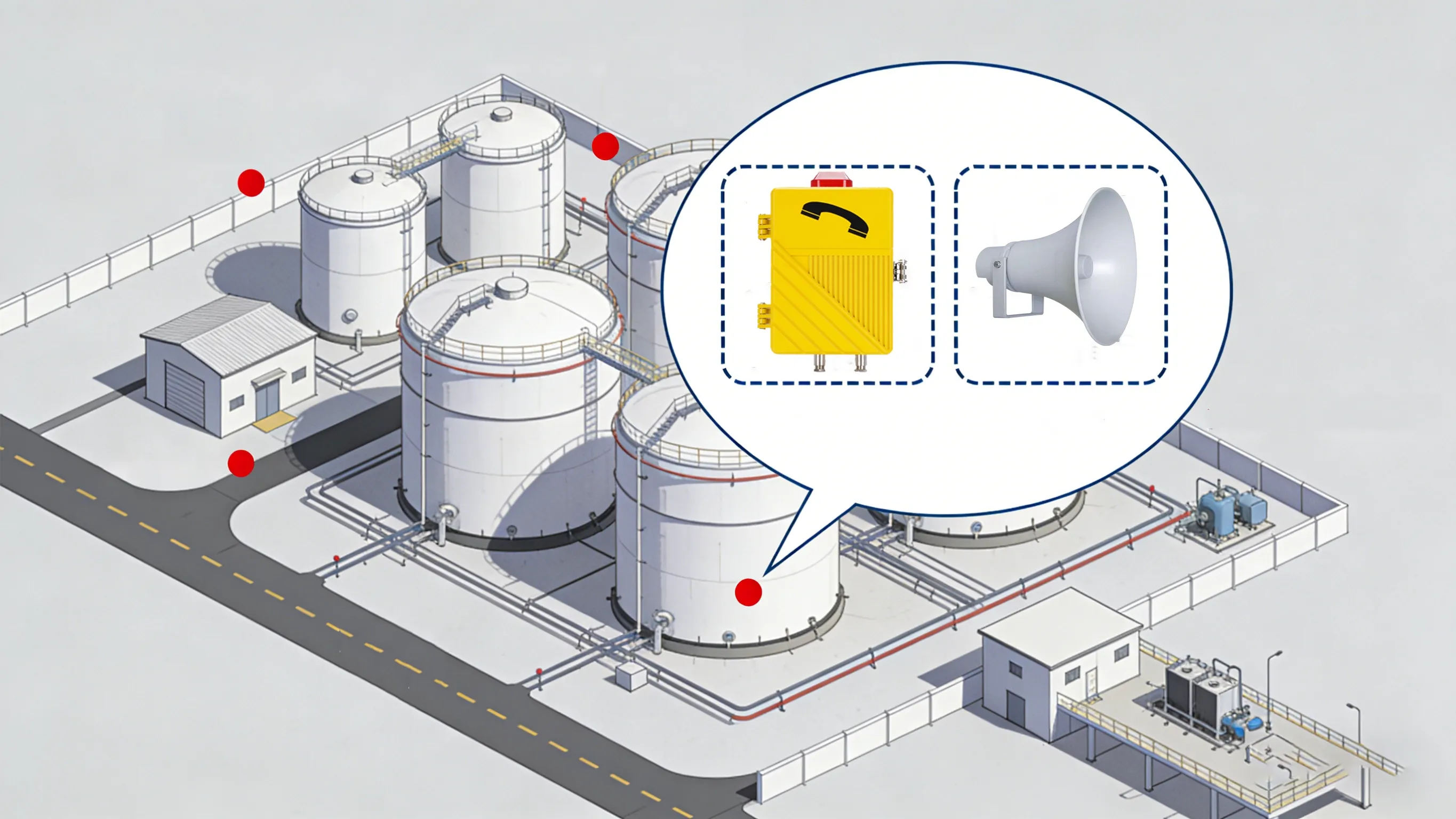
Daily Application and Emergency Response Scenarios for Explosion-Proof Amplified Telephones in Oil Tank Farms
The application of explosion-proof amplified telephones in oil tank farms spans the entire process of daily production, equipment inspection, maintenance operations, and emergency response. They serve as both a communication tool for daily production scheduling and a core command device during emergencies, comprehensively covering various operational scenarios to enhance safety control efficiency and emergency response capability.
Daily Production Scheduling Applications
Real-time Intercom and Instruction Transmission
During routine operations such as tank loading/unloading, level monitoring, valve adjustment, and pump start/stop, control room operators can use the explosion-proof amplified telephones for real-time two-way intercom with field personnel. This allows precise instruction issuance and feedback on-site status, eliminating the need for personnel to travel back and forth, thus improving operational efficiency. For multi-person operations, the system supports multiple telephones online simultaneously for intercom, enabling dispatching among control room, pump houses, loading platforms, and tank field, ensuring seamless workflow.
Zoned Broadcasting and Timed Notifications
IP network systems support zoned broadcasting, allowing specific instructions or notices to be sent to particular tank groups or operational areas (e.g., equipment maintenance reminders, operational alerts, safety precautions). This avoids other areas with full-area broadcasts. Timed broadcasts can also be set for routine safety reminders, daily inspection notices, or process parameter announcements, achieving safety.
Communication Support for Inspection Operations
Inspection personnel can use the explosion-proof amplified telephones along their route to maintain communication with the control room. They can report information such as tank levels, pressure, leaks, and valve status. If an abnormality is found, they can report it immediately to prevent escalation. During inspections, if they encounter equipment failure or sudden situations, they can one-key emergency call the control room to quickly obtain guidance.
Core Emergency Response Applications
In the event of sudden accidents like leaks, fires, or explosions in oil tank farms, the explosion-proof amplified telephone system can quickly switch to emergency mode, becoming the core communication hub for emergency command, enabling rapid response, precise dispatching, and orderly evacuation.
One-Key Emergency All-Call Broadcast
Upon receiving an accident, the control room can initiate a one-key full-area emergency broadcast, broadcast signals and prioritizing emergency instructions. Key information such as accident location, evacuation routes, and requirements is clearly conveyed, ensuring all personnel on-site receive instructions immediately, avoiding panic and disorderly evacuation.
Emergency Linkage and Dispatch Command
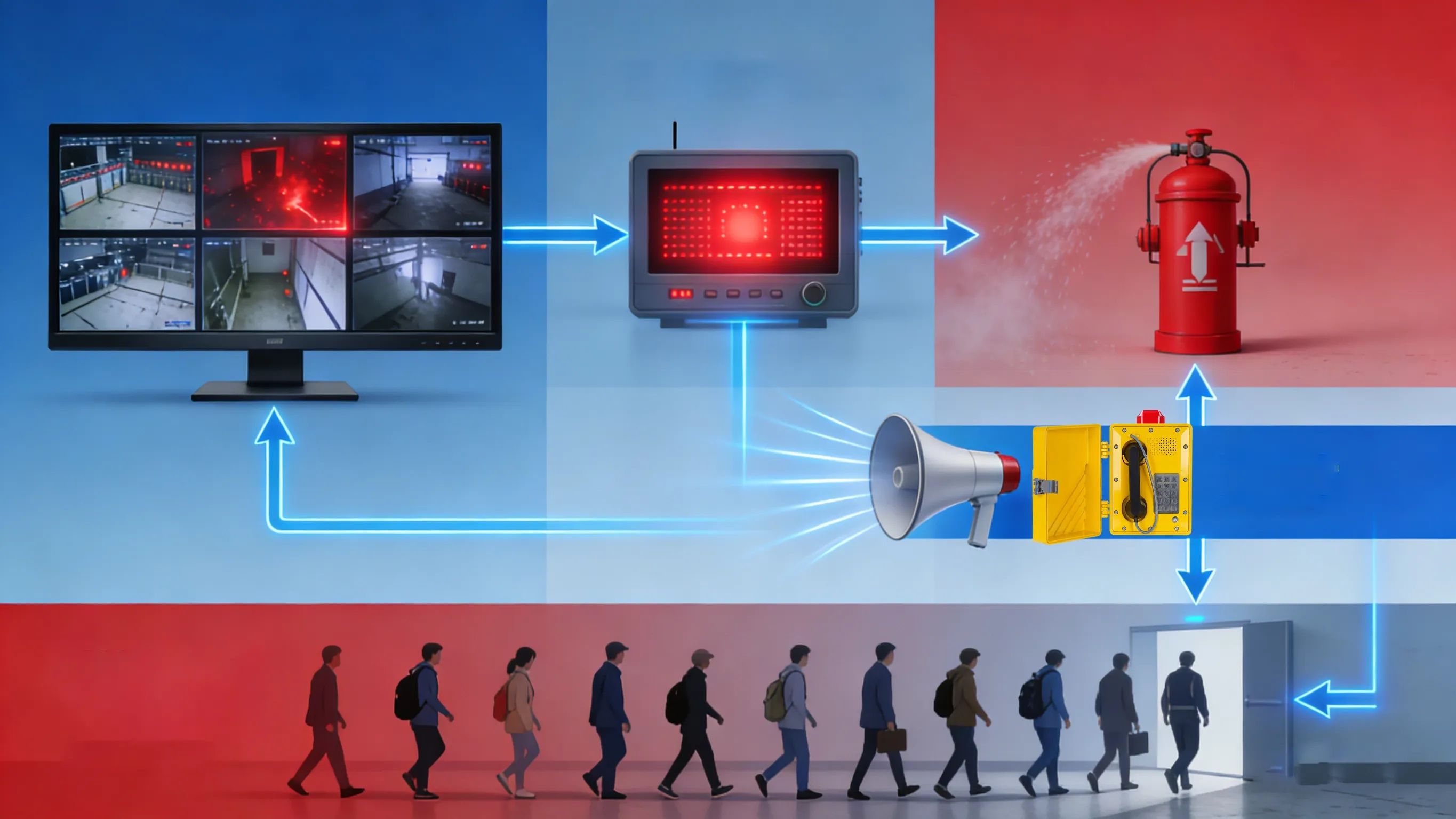
The system can integrate with the tank farm's fire alarm system, gas detection system, and video surveillance system. When combustible gas concentrations exceed limits or fire detectors activate, it can automatically trigger an broadcast from the explosion-proof amplified telephones, simultaneously announcing the location and risk level. The control room can dispatch emergency responders and fire brigades via the telephones, precisely assign rescue tasks, in real-time, and communicate emergency, improving rescue efficiency.
Personnel Evacuation and Site Control
Explosion-proof speakers along evacuation routes continuously loop evacuation instructions, guiding personnel to evacuate along safe routes to emergency assembly points. Simultaneously, voice control can be used to warn against entering hazardous areas, ensuring order at the emergency rescue scene and preventing secondary accidents.
Operation, Maintenance, and Compliance Assurance for Explosion-Proof Amplified Telephones in Oil Tank Farms
As critical safety equipment in the petrochemical industry, explosion-proof amplified telephones require establishing a operation and maintenance management system. Regular inspection, maintenance, and servicing are essential to ensure the equipment remains in perfect working condition, meet production safety compliance requirements, and successfully pass various safety inspections and acceptances.
Daily Operation and Maintenance Specifications
Routine Inspection and Monitoring
Establish a daily system involving shift operators and electrical maintenance personnel. Check equipment integrity, seal condition, indicator light status, call voice quality, and amplification. Inspect lines for damage and verify grounding is secure. For IP network systems, the backend can monitor equipment online status and signal strength, immediately reporting any offline or faulty devices.
Regular Maintenance and Servicing
Clean equipment housings weekly to remove dust and oil, preventing blockage of amplification ports and ensuring heat dissipation. Monthly, check explosion-proof seal integrity, tighten terminal connections, and test intercom/broadcast functions. Quarterly, conduct comprehensive inspections, testing explosion-proof performance, ground resistance, and line transmission quality, replacing aged seals and components. Annually, commission a professional to conduct explosion-proof performance testing and issue a test report, ensuring compliant equipment operation.
Fault Handling and Spare Parts Inventory
Establish a fault handling mechanism with clear repair procedures. General faults should be resolved within 24 hours; major faults require immediate repair, avoiding equipment operation while faulty. Stock common spare parts such as explosion-proof microphones, speakers, seals, and cable glands to ensure replacement during repairs, minimizing system downtime.
Compliance Management and Record Keeping
Establish a dedicated management for explosion-proof amplified telephones, retaining documents such as explosion-proof certificates, product certificates, installation drawings, acceptance reports, maintenance logs, and test reports, ensuring full traceability. Update the promptly after equipment replacement or repair to ensure consistency with the on-site equipment status. Cooperate with inspections by emergency management, fire, and petrochemical industry regulatory authorities by proactively providing relevant documentation, ensuring tank farm production safety compliance.
Personnel Training and Operating Procedures
Conduct specialized training for tank farm operators, inspection personnel, and maintenance staff. Explain the operation methods, functions, daily, emergency operation procedures, and safety precautions for the explosion-proof amplified telephones. Ensure all personnelequipment usage skills and prevent improper operation. Conduct regular emergency communication drills, simulating accident scenarios involving broadcast dispatching and emergency intercom operations, to enhance personnel emergency response capabilities and ensure the equipment functions optimally during actual incidents.
Application Case and Benefit Analysis
A crude oil tank farm in a large coastal petrochemical base in China covers a total area of 120,000 square meters and houses eight 100,000 cubic meter crude oil tanks. It is a high-risk flammable and explosive area. Initially using two-way radios for communication, it suffered from signal盲区, significant noise interference, and slow emergency response. Subsequently, an IP network-based explosion-proof amplified telephone system was deployed, including 1 master control unit, 16 wall-mounted explosion-proof amplified telephones, and 32 explosion-proof speakers, achieving seamless coverage across the entire farm.
Since implementation, daily production dispatching efficiency has increased by 40%. Inspection personnel enjoy uninterrupted communication, and instruction transmission has achieved zero errors. During emergency drills, emergency broadcast response time was reduced to 3 seconds with seamless full-area voice coverage, significantly improving personnel evacuation efficiency. Over two years of operation, there have been no explosion-proof safety failures, and maintenance costs have been reduced by 30%. The system successfully passed the National First-Level Acceptance for Work Safety, effectivelying the safe production of the tank farm.
From a benefit perspective, the application of explosion-proof amplified telephones, on one hand, eliminates safety hazards caused by non-explosion-proof communication devices, reducing accident probability and protecting personnel and property safety. On the other hand, it improves production operation efficiency, reduces manual communication costs, optimizes emergency response processes, lowers accident losses, and meets petrochemical industry safety production compliance requirements, avoiding production stoppages for rectification or administrative penalties due to non-compliant equipment. This yields combined safety, economic, and compliance benefits.
Summary and Development Trends
As a highly flammable and explosive hazardous scenario, the safety and reliability of the communication system in oil tank farms directly impact overall production safety. Explosion-proof amplified telephones, with their robust explosion-proof performance, environmental adaptability, and functional suitability, have become the optimal communication solution for tank farms. They permeate daily production, inspection scheduling, and emergency response processes, serving as core equipmenting the safe and stable operation of the farm.
With the development of smart petrochemical and industrial IoT, explosion-proof amplified telephones are evolving towards intelligence, networking, and integration. Future trends include deeper integration with tank farm intelligent monitoring systems, unmanned inspection systems, and emergency response systems. They will incorporate functions like voice recognition, intelligent, remote diagnostics, and big data analysis, transitioning from "passive communication" to "active," providing more comprehensive and intelligent protection for the safe production of oil tank farms.
During the selection and deployment process, petrochemical enterprises must strictly adhere to explosion-proof safety standards, tailor solutions based on actual tank farm needs, standardize installation and maintenance, and strengthen personnel training. This ensures the full utilization of the core value of explosion-proof amplified telephones, building a robust safety communication for oil tank farms.
레이블:
관련 뉴스
클린룸 전화기란 무엇인가? 통제 구역을 위한 SIP 통신
2026-09-29
통합 디스패치 시스템은 여러 통신 네트워크를 어떻게 통합합니까?
2026-09-22
2026-08-31
2026-08-24
철도 자동 호출 시스템 솔루션: 자동 호출, 확인 피드백 및 배차 연동
2026-08-17


이메일 주소:
핫라인: