경험

경험

모든 산업을 위한 안정적이고 안정적인 SIP 커뮤니케이션 솔루션.

모든 경우

접점

접점

풍부한 글로벌 사례를 보유한 업계 최고의 특수 통신 제공업체. NAT의 방폭 및 SIP 파견 시스템 전원 프로젝트 - 검증된 성공을 거둔 신뢰할 수 있는 파트너.

계속 탐색

운송

공공 안전

Energy Industry

리소스

리소스

Becke 커뮤니티에서 모범 사례를 발견하고, 혁신적인 솔루션을 탐색하고, 동료 파트너와 네트워크를 구축하십시오.

문의
지식
2026-03-18 10:59:03
How to Deploy Converged Communication Systems on Emergency Command Vehicles | Becke Telcom
Becke Telcom’s converged communication system for emergency command vehicles delivers seamless narrow-broadband integration, flexible video access and full dispatch capabilities, optimizing on-site emergency command efficiency.

Becke Telcom

How to Deploy Converged Communication Systems on Emergency Command Vehicles | Becke Telcom
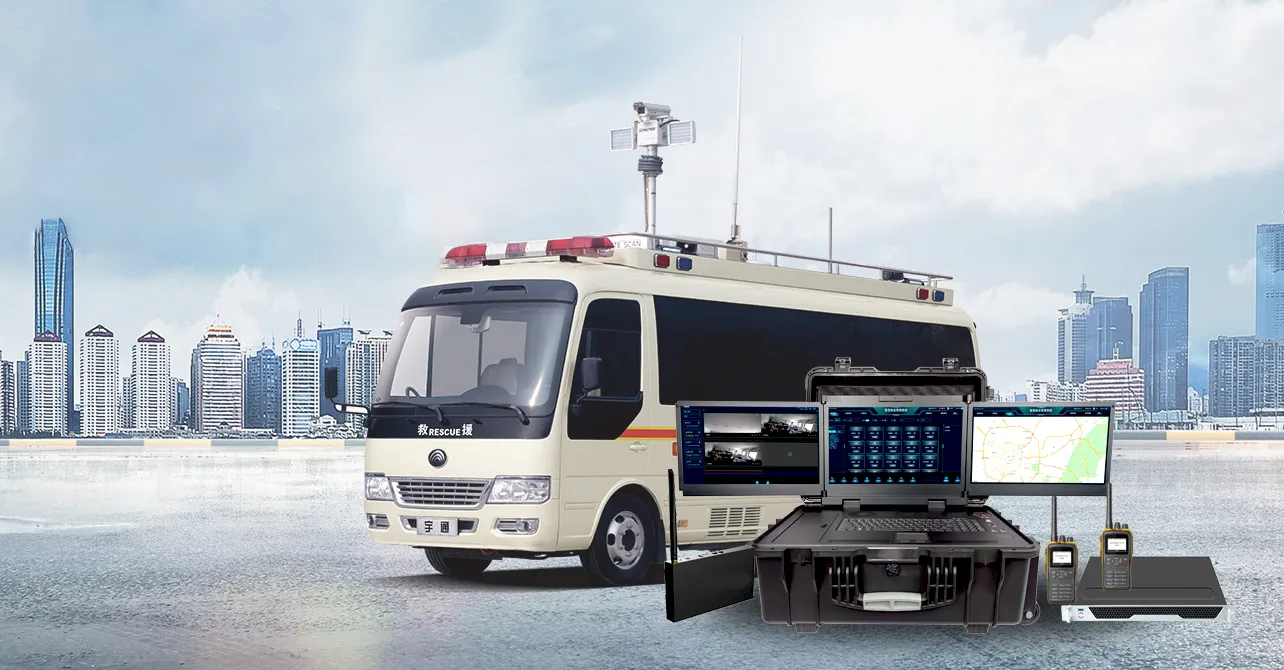
Emergency command vehicles are critical emergency equipment for on-site emergency response scenarios. To address communication and command challenges across diverse emergency situations, these vehicles are equipped with a wide range of communication devices supporting broadband, narrowband, voice, and video applications. The core challenges for emergency command vehicles lie in integrating these disparate communication devices and coordinating audio and video services under emergency conditions.
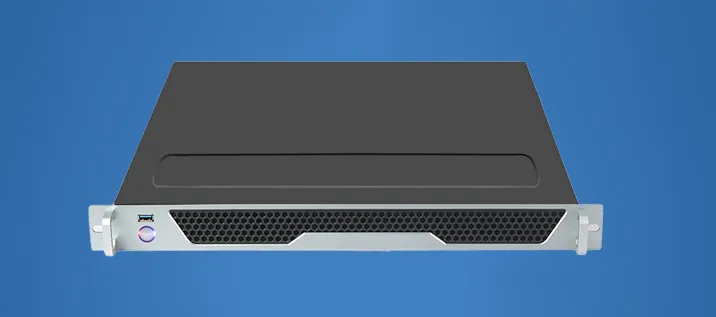
Becke Telcom has developed a tailored Converged Communication Solution for emergency command vehicles, which is composed of four core components: a converged communication system, an ROIP gateway, a video transcoding server, and a dispatch and control unit. This solution effectively resolves pressing on-site emergency command issues, including real-time audio and video interconnection with superior command centers, narrowband and broadband integration in emergency scenes, convergence of multiple video resources, and on-demand transcoding and backhaul. It fully unlocks the operational potential of emergency command vehicles and elevates on-site emergency response and command efficiency to a new level.

Core Components of Becke Telcom’s Converged Communication Solution

The rational design and synergy of the four core components form the technical foundation of the converged communication solution, with each component undertaking specific functional responsibilities and achieving seamless interconnection to build a comprehensive on-board communication and command ecosystem.

Converged Communication System

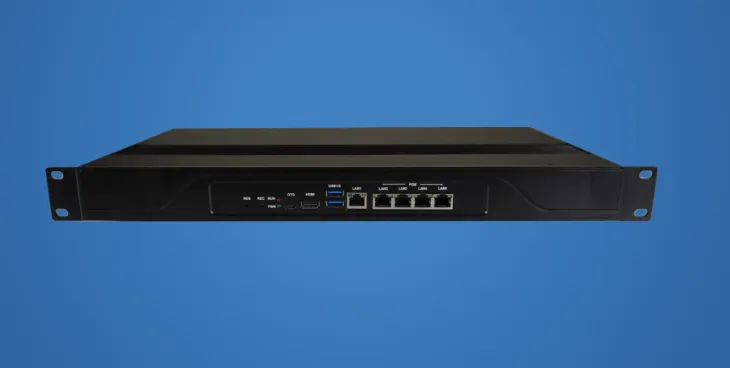
As the core control hub of the entire on-board solution, the converged communication system provides SIP-based softswitch communication capabilities, serving as the central node for all on-board communication services. It supports seamless docking with superior command and dispatch platforms and various on-board gateways, and integrates a full set of core functions including audio and video dispatch, two-way voice calls, ROIP intercom, and audio and video recording and video storage. All communication and command instructions on the emergency command vehicle are uniformly scheduled and managed through this system, ensuring the standardization and centralization of on-site communication services and laying a solid foundation for efficient on-site command.

ROIP Gateway

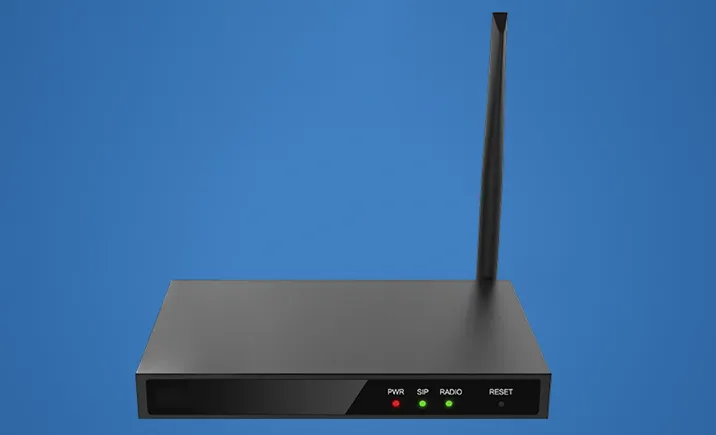
The ROIP gateway is the key component for realizing narrowband communication access and integration on emergency command vehicles, addressing the interconnection needs of various traditional narrowband communication devices in emergency scenarios. It supports the access of mainstream narrowband communication systems including VHF/UHF, PDT, DMR, TETRA, shortwave radio stations, and aviation radio stations, and achieves seamless interconnection and data interaction with other on-board converged communication equipment. By converting narrowband radio signals into IP-based data streams, the ROIP gateway breaks the communication barrier of single narrowband equipment, enabling unified scheduling and management of all narrowband communication resources by the on-board converged communication system and realizing the organic integration of narrowband communication with other on-board communication services.

Video Transcoding Server

The video transcoding server undertakes the core task of video resource convergence, protocol adaptation and format conversion on emergency command vehicles, solving the problem of incompatible video protocols and coding formats in emergency scenes. It supports the access of multiple mainstream video protocols including GB/T28181, SIP, RTSP, RTMP, RTP and SRT, and is compatible with H.264 and H.265 mainstream video coding standards for real-time transcoding. In addition to basic transcoding functions, it also provides practical video processing capabilities such as video screen fusion, watermark embedding and subtitle overlay, which can customize and optimize video streams according to the actual needs of emergency command, ensuring clear and stable video transmission and display in complex emergency environments.

Dispatch and Control Unit

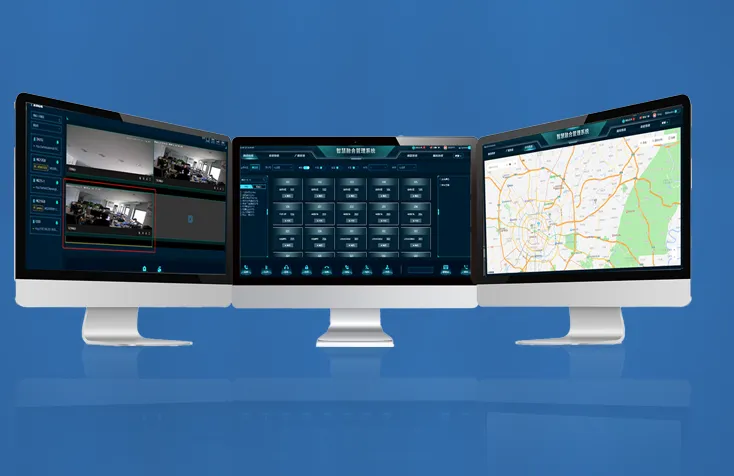
The dispatch and control unit is the human-computer interaction terminal of the on-board converged communication system, based on on-board computer hardware and equipped with a professional video fusion dispatch system. Operators can realize unified scheduling and management of all on-board communication devices through the on-board computer, including core command operations such as audio and video call dispatch, emergency instruction receiving and delivery. The unit supports real-time display of geographic location information of on-site emergency points and communication equipment, and is equipped with professional map operation functions. Operators can complete regional dispatch and resource scheduling through map selection and positioning, making on-site emergency command more intuitive and efficient.

On-Board Equipment Interconnection and Networking Architecture

Becke Telcom’s converged communication solution for emergency command vehicles adopts a flexible and scalable networking architecture, which can realize the seamless interconnection of various on-board and on-site communication and video equipment, and build a comprehensive on-site emergency communication network covering satellite, wireless broadband, narrowband radio and private network.
The on-board system connects to satellite ground stations through vehicle-mounted satellite equipment to realize long-distance and cross-regional communication interconnection with superior command centers under the condition of damaged public communication networks. It relies on 4G/5G vehicle-mounted routers and broadband ad-hoc networks to build on-site broadband communication coverage, supporting high-speed transmission of large-bandwidth data such as video and high-definition images. The ROIP gateway is connected to DMR vehicle stations, walkie-talkies and shortwave radio stations to integrate on-site narrowband communication resources, while the video transcoding server accesses on-site video resources such as UAVs, ball and control cameras, and IP phones, realizing the convergence of all on-site audio and video and communication resources.
The on-board dispatch console and command seats are the core operation nodes of the system, and intelligent terminals on the emergency site can access the on-board converged communication system through the broadband ad-hoc network, realizing information sharing and command synergy between the command vehicle and on-site emergency personnel. The entire networking architecture is highly compatible and expandable, and can be flexibly adjusted according to the scale of the emergency scene and the type of equipment, meeting the communication and command needs of different emergency scenarios.

Key Advantages of Becke Telcom’s Converged Communication Solution Deployment

Targeting the high requirements of emergency command for real-time, stability and operability, Becke Telcom’s solution has formed a number of core deployment advantages through optimized technical design and product integration, which effectively reduces the deployment difficulty of on-board communication systems and improves the efficiency of on-site emergency command.

Simplified Deployment Mode

The solution adopts an integrated server deployment mode for all core equipment, realizing the out-of-the-box effect without complex on-site installation and debugging. All system docking protocols and external interfaces are designed in accordance with national and industrial standards, which greatly reduces the technical threshold of system deployment and docking. The integrated design also reduces the volume and power consumption of on-board equipment, adapting to the limited space and power supply conditions of emergency command vehicles, and ensuring the rapid deployment and startup of the communication system in emergency situations.

Narrowband and Broadband Convergence

The most prominent advantage of the solution is to realize the deep integration of narrowband and broadband communication in emergency scenes. Through the technical support of the ROIP gateway and converged communication system, it breaks the information island between traditional narrowband communication equipment and modern broadband communication systems, and realizes the two-way interconnection and data sharing of all communication devices on the emergency command vehicle and on the scene. Whether it is the narrowband intercom of on-site emergency personnel or the high-definition video transmission of broadband equipment, they can be uniformly scheduled and managed in the same system, ensuring the smoothness of on-site communication and command information transmission.

Comprehensive Dispatch and Command Capabilities

The solution integrates a full set of dispatch and command capabilities required for on-site emergency response, forming a one-stop command and communication system that covers voice dispatch, video dispatch, instruction dispatch, and GIS dispatch. It not only supports basic ROIP intercom and audio and video call functions, but also realizes on-demand backhaul of on-site audio and video resources to superior command centers, enabling remote command personnel to grasp the on-site situation in real time and issue accurate command instructions. A single system can meet all the dispatch and communication needs of emergency command vehicles, avoiding the trouble of switching between multiple systems and improving the efficiency of on-site command operations.

User-Friendly Operation Mode

The entire on-board system is designed with the actual needs of on-site emergency command in mind, featuring simple equipment operation and intuitive human-computer interaction. All dispatch and control operations can be completed through the on-board computer, without the need for professional and complex operation training for operators. The system supports map-based information display and map circle selection operation, which can visually display the distribution of on-site emergency points, communication equipment and personnel positions, and realize rapid regional dispatch and resource scheduling through simple map operations, making on-site command more efficient and easy to operate.

Flexible Video Access Capabilities

The video transcoding server of the solution has strong video access and processing capabilities, supporting a wider range of video protocols including GB/T28181, RTSP, ONVIF, SIP, WebRTC, HTTP_FLV, Websocket_FLV, HLS and RTMP, covering almost all mainstream video transmission and access protocols in the industry. It can realize real-time adjustment of video parameters such as frame rate, bit rate and resolution according to the network conditions of the emergency scene and the needs of video transmission, ensuring the smooth and stable transmission of video streams under different network bandwidth conditions. The flexible video access and processing capabilities realize the full convergence of on-site video resources, providing visual and accurate on-site information for emergency command.

Open Protocol Interfaces

The entire converged communication system is designed with open protocols, with good compatibility and scalability. It supports seamless docking with superior command centers, video conference systems, public telephone systems and video surveillance systems, realizing the interconnection of emergency command information between different levels and different systems. At the same time, the system provides a complete set of API development interfaces, supporting in-depth secondary development and system integration according to the personalized needs of users. It can be flexibly integrated with the existing information systems of government and enterprise users, protecting the original IT investment and realizing the long-term expansion of the system function.

Conclusion

In the face of increasingly complex emergency response scenarios, the communication and command capabilities of emergency command vehicles have become a key factor affecting the efficiency of on-site emergency response. Becke Telcom’s Converged Communication Solution for emergency command vehicles, through the organic combination of converged communication system, ROIP gateway, video transcoding server and dispatch and control unit, effectively solves the core pain points of on-board communication device integration, narrow-broadband disconnection and video resource dispersion in emergency scenarios.
The solution’s simplified deployment mode, deep narrowband and broadband integration, comprehensive dispatch capabilities and open protocol design make it a reliable on-board communication and command solution for emergency command vehicles. It can realize rapid deployment and efficient operation of the on-board communication system in various emergency scenarios, realize the seamless interconnection of on-site and remote command information, and provide strong technical support for on-site emergency command and decision-making. As a professional provider of audio-visual communication and converged communication solutions, Becke Telcom will continue to optimize the product functions and technical design of the emergency command vehicle converged communication system based on the actual needs of emergency response, and contribute more to the improvement of emergency response and command capabilities in various industries.

레이블:


Becke Telcom은 철도, 터널, 석유 및 가스 및 해양 분야를 위한 산업용 방폭 통신을 전문으로 하며 PA, 인터콤 및 통화가 통합된 PAGA, SOS 및 IP 전화를 제공합니다.


저작권©2012-202Becke Telcom 모든 권리 예약

메시지 남기기

저희에게 제안이나 질문이 있으시면 언제든지 연락주세요!

We use cookie to improve your online experience. By continuing to browse this website, you agree to our use of cookie.

Cookies

Please read our Terms and Conditions and this Policy before accessing or using our Services. If you cannot agree with this Policy or the Terms and Conditions, please do not access or use our Services. If you are located in a jurisdiction outside the European Economic Area, by using our Services, you accept the Terms and Conditions and accept our privacy practices described in this Policy.
We may modify this Policy at any time, without prior notice, and changes may apply to any Personal Information we already hold about you, as well as any new Personal Information collected after the Policy is modified. If we make changes, we will notify you by revising the date at the top of this Policy. We will provide you with advanced notice if we make any material changes to how we collect, use or disclose your Personal Information that impact your rights under this Policy. If you are located in a jurisdiction other than the European Economic Area, the United Kingdom or Switzerland (collectively “European Countries”), your continued access or use of our Services after receiving the notice of changes, constitutes your acknowledgement that you accept the updated Policy. In addition, we may provide you with real time disclosures or additional information about the Personal Information handling practices of specific parts of our Services. Such notices may supplement this Policy or provide you with additional choices about how we process your Personal Information.


Cookies

Cookies are small text files stored on your device when you access most Websites on the internet or open certain emails. Among other things, Cookies allow a Website to recognize your device and remember if you've been to the Website before. Examples of information collected by Cookies include your browser type and the address of the Website from which you arrived at our Website as well as IP address and clickstream behavior (that is the pages you view and the links you click).We use the term cookie to refer to Cookies and technologies that perform a similar function to Cookies (e.g., tags, pixels, web beacons, etc.). Cookies can be read by the originating Website on each subsequent visit and by any other Website that recognizes the cookie. The Website uses Cookies in order to make the Website easier to use, to support a better user experience, including the provision of information and functionality to you, as well as to provide us with information about how the Website is used so that we can make sure it is as up to date, relevant, and error free as we can. Cookies on the Website We use Cookies to personalize your experience when you visit the Site, uniquely identify your computer for security purposes, and enable us and our third-party service providers to serve ads on our behalf across the internet.

We classify Cookies in the following categories:
 ●  Strictly Necessary Cookies
 ●  Performance Cookies
 ●  Functional Cookies
 ●  Targeting Cookies


Cookie List
A cookie is a small piece of data (text file) that a website – when visited by a user – asks your browser to store on your device in order to remember information about you, such as your language preference or login information. Those cookies are set by us and called first-party cookies. We also use third-party cookies – which are cookies from a domain different than the domain of the website you are visiting – for our advertising and marketing efforts. More specifically, we use cookies and other tracking technologies for the following purposes:

Strictly Necessary Cookies
These cookies are necessary for the website to function and cannot be switched off in our systems. They are usually only set in response to actions made by you which amount to a request for services, such as setting your privacy preferences, logging in or filling in forms. You can set your browser to block or alert you about these cookies, but some parts of the site will not then work. These cookies do not store any personally identifiable information.

Functional Cookies
These cookies enable the website to provide enhanced functionality and personalisation. They may be set by us or by third party providers whose services we have added to our pages. If you do not allow these cookies then some or all of these services may not function properly.

Performance Cookies
These cookies allow us to count visits and traffic sources so we can measure and improve the performance of our site. They help us to know which pages are the most and least popular and see how visitors move around the site. All information these cookies collect is aggregated and therefore anonymous. If you do not allow these cookies we will not know when you have visited our site, and will not be able to monitor its performance.

Targeting Cookies
These cookies may be set through our site by our advertising partners. They may be used by those companies to build a profile of your interests and show you relevant adverts on other sites. They do not store directly personal information, but are based on uniquely identifying your browser and internet device. If you do not allow these cookies, you will experience less targeted advertising.

How To Turn Off Cookies
You can choose to restrict or block Cookies through your browser settings at any time. Please note that certain Cookies may be set as soon as you visit the Website, but you can remove them using your browser settings. However, please be aware that restricting or blocking Cookies set on the Website may impact the functionality or performance of the Website or prevent you from using certain services provided through the Website. It will also affect our ability to update the Website to cater for user preferences and improve performance. Cookies within Mobile Applications

We only use Strictly Necessary Cookies on our mobile applications. These Cookies are critical to the functionality of our applications, so if you block or delete these Cookies you may not be able to use the application. These Cookies are not shared with any other application on your mobile device. We never use the Cookies from the mobile application to store personal information about you.

If you have questions or concerns regarding any information in this Privacy Policy, please contact us by email at . You can also contact us via our customer service at our Site.